Five Days for a PCB, Five Weeks for a Box: The Enclosure Problem Nobody's Fixing
Last month I finished a sensor node on a Tuesday night. Wednesday morning I uploaded the Gerbers to a board house, paid $18 including shipping, and had four fully assembled PCBs on my bench in Ohio by the following Monday. Total effort: about ten minutes and one coffee.
Then I went to make an enclosure for it. Two hours of file wrangling, three quote requests, one awkward phone call about "minimum order quantities," and a delivery estimate measured in weeks. For a box. A box with four holes in it.
If you've been in this hobby for more than a minute, you already know the pain. The question is why — and whether the new crop of on-demand services is finally closing the gap.
The Asymmetry Nobody Talks About
PCB fabrication got good because a handful of Asian board houses turned it into a commodity. Standardized file formats, instant quoting algorithms, panelized shared runs, and ruthless automation mean your board rides along with thousands of others. The economics only work at volume, and the software handles the volume.
Enclosures never got that treatment. Every aluminum chassis is a one-off machining job. Every injection-molded case demands a tool that costs more than your car. Sheet metal shops still email you PDFs to sign. The maker world essentially runs on 3D printing for anything that isn't a PCB, and that's a compromise, not a solution.
We Tested the Options
To put numbers on it, we spec'd the same simple project: a 120 × 80 × 35 mm enclosure in aluminum, with a rectangular display cutout, four mounting bosses, and a powder-coated finish. Then we ran it through every service path we could find.
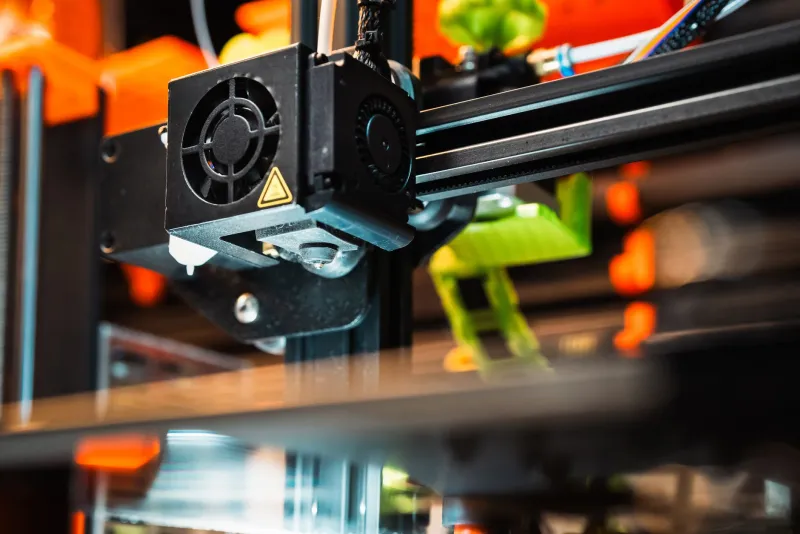
3D printing (in-house and farm services). Fast and cheap — a farm-printed nylon part showed up in four days for about $40. But surface finish and dimensional consistency aren't enclosure-grade for anything you'd show a client. Great for prototypes, weak for products.
Online CNC bureaus. Instant quoting is real now — upload a STEP file, get a price in seconds. Our aluminum part came back around $180 for a single unit, eight business days out. That's genuinely impressive compared to five years ago, but the instant quote fell apart the moment we added the powder coat. That became a "custom quote," which became an email thread.
Sheet metal APIs. The fastest movers here quote bent-and-cut parts algorithmically. Our design, simplified to bent sheet instead of machined billet, landed near $95 with a six-day turnaround. The catch: design constraints. If your enclosure doesn't look like a bent sheet metal box, you're back to email.
Local job shops. Still the worst experience. Two of three never responded. The one that did quoted $400 and a three-week lead time for the privilege.
Compare that to the PCB: $18, five days, zero human interaction. Even the best enclosure path cost five times more and took 60% longer for a part that's arguably simpler.
What's Actually Broken
It's not the machines. CNC mills and laser cutters are commodities. The bottleneck is software and standardization. Gerbers are a solved, universal format. Enclosure design is a zoo of STEP, STL, DXF, and hand-waved dimensions that may or may not match the PCB they're supposed to house.
The second problem is finishing. Machining is automatable; anodizing, powder coating, and tapping are still craft processes that break the algorithmic pipeline. That's why every "instant quote" quietly excludes the steps that make a part look finished.
What the Industry Needs to Build
Here's my wishlist, as a person who just wants a decent box:
- A Gerber-equivalent for enclosures. One standard file format that captures geometry, tolerances, finishes, and hardware in a machine-readable way.
- Shared runs for boxes. Panelize our one-off enclosures with everyone else's. I'll accept a slightly odd nesting if it cuts the price in half.
- Finishing-as-a-service APIs. Let me add anodize or powder coat to a cart like I add HASL or ENIG to a board order.
- ECAD-MCAD handoff by default. If my board house could auto-generate a mating enclosure blank from my PCB file, that alone would sell me forever.
The Bottom Line
We're closer than we've ever been. Instant-quoted CNC and sheet metal are real, usable services today, and if your design flexes to their constraints, you can have a respectable enclosure inside two weeks. But until someone applies the JLCPCB playbook — standardization, automation, shared volume — to the humble box, every project ends the same way: a beautiful board, waiting in a 3D-printed draft.
The board houses solved this problem a decade ago. Somebody should steal their homework.