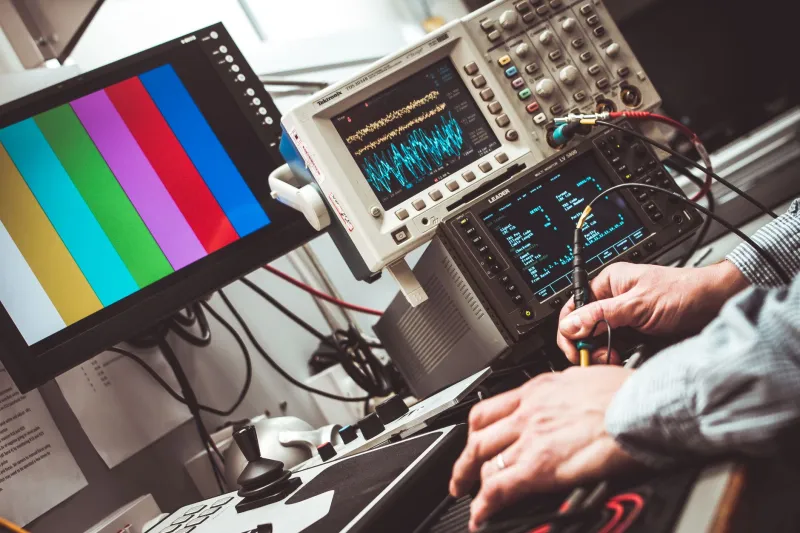
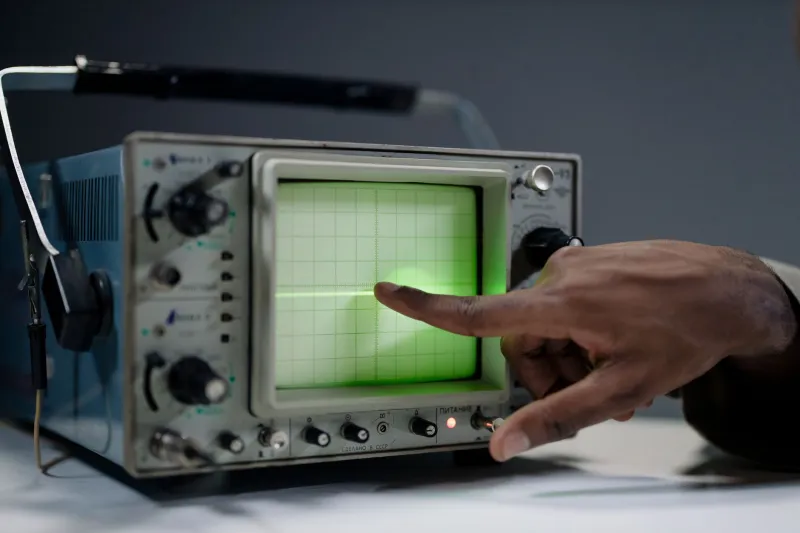
Three Benches, Three Budgets: We Spent $250, $500, and $1,000 Building Electronics Workspaces From Zero
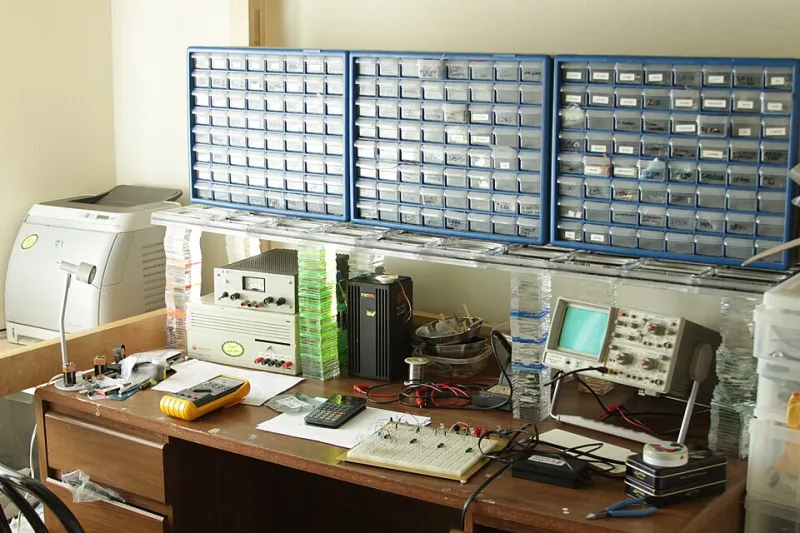
Photo: Windell Oskay from Sunnyvale, CA, USA, CC BY 2.0, via Wikimedia Commons
The Question Every New Maker Asks
Somewhere between your first Arduino blink sketch and your fourth Amazon order, you start wondering: how much bench do I actually need? The internet is full of gear lists that assume you've got a spare grand lying around, and forum threads that insist you can solder with a lighter and a paperclip. Both are wrong.
So we did it the only way we know how — we built three workbenches from an empty folding table, one at $250, one at $500, and one at $1,000, then used each setup for real projects over a month. Here's where every dollar went, and which ones we'd spend again.
The $250 Bench: Broke, But Functional
This is the "I want to build things this weekend" budget, and honestly, it surprised us.
- Soldering iron (TS100-style portable, ~$70): The single best purchase on any bench at any price. Heats in seconds, runs off a laptop brick, and won't cook your pads.
- Multimeter (AstroAI-style, ~$20): No, it's not a Fluke. Yes, it reads voltage, continuity, and resistance accurately enough for 95% of hobby work.
- Breadboard + jumper kit (~$15): Non-negotiable.
- Solder, flux, desoldering wick, tip cleaner (~$25): Buy real 63/37 or lead-free from a name brand. Cheap solder will make you hate the hobby.
- Helping hands / PCB holder (~$15)
- Wire strippers, flush cutters, side cutters (~$30): Mid-grade, not the $5 specials that chip on the first use.
- Bench power supply (adjustable buck converter module, ~$25): Not a real lab supply, but with a 12V wall adapter it gets you going.
- Assorted passives and headers (~$50): One of those 1,400-piece component kits.
What it can't do: anything beyond through-hole comfortably, no hot air, no real current limiting, and your eyes will hate you by project three. But it builds. We prototyped a working sensor node on this bench with zero frustration beyond lighting.
The $500 Bench: The Sweet Spot
The extra $250 doesn't buy more stuff — it buys fewer compromises.
- Upgrade the iron to a T12-based station (~$60): Adjustable temp, real stand, better ergonomics.
- Add hot air rework (~$70): This is the gatekeeper. Once you can reflow an SMD part, an entire category of projects opens up.
- Real bench supply with current limiting (~$90): Current limiting is the feature that saves your projects. When you short something, the supply folds instead of your board.
- USB microscope (~$40): Soldering 0805 resistors with your naked eyeballs is a young person's game.
- Better multimeter (~$60): True RMS, capacitance, faster continuity beeps. Still not a Fluke.
- Fume extraction fan (~$30): Your lungs called. They'd like a word.
- The remainder (~$150): A proper desk with a cutting mat, an organizer cabinet for parts, a decent task lamp with magnifier.
This is the bench we'd recommend to anyone serious about the hobby. Nothing on it is a bottleneck for a typical maker project, and nothing on it is so cheap it'll fail you mid-solder.
The $1,000 Bench: Diminishing Returns, Comfortably Furnished
Doubling the budget again gets you luxury, not capability:
- Hakko FX-971-style station (~$180) — the last iron you'll buy for a decade.
- Rigol or Siglent entry bench supply (~$250) — programmable, quiet, honest specs.
- A used Rigol DS1054Z oscilloscope (~$300 used) — the classic first scope, hackable to 100MHz.
- Logic analyzer (clone Saleae, ~$15) — criminally cheap, absurdly useful.
- ESD-safe mat, wrist strap, and grounding (~$60)
- The rest (~$200) — tooling depth: precision tweezers, a hot plate for reflow, real parts storage, a quality soldering vacuum.
Is the scope worth it? For digital work and debugging serial buses, absolutely. For blinking LEDs and building guitar pedals? It'll sit there looking expensive. The $500 bench does everything the $1,000 bench does, just slower and with more squinting.
The Cost-Per-Utility Rankings
If we ranked every purchase by how much grief it removes per dollar:
- Soldering iron — the hobby literally cannot happen without one
- Multimeter — any working one beats no working one
- Current-limited power supply — invisible until the day it saves your board
- Hot air station — the SMD unlock
- Bench scope — fantastic, but last
Notice what's missing from the top: the expensive meter, the fancy scope. The gear that feels most professional is rarely the gear that matters first.
The Upgrade Roadmap
Start with the $250 bench. Live with it for two months — you'll learn what annoys you, which is worth more than any review. Then buy hot air. Then a real supply. Then the scope. Each purchase should solve a problem you've actually had, not one you're imagining.
The best bench isn't the priciest one. It's the one where every tool earned its spot on the mat.