From Dead Laptop to Gold Flakes: We Traced a Pile of Junk Boards Through America's E-Waste Machine

Photo: USEPA Environmental-Protection-Agency, Public domain, via Wikimedia Commons
The Backseat Full of Dead Electronics
There's a moment every maker knows: you open the garage cabinet, see the tower of dead motherboards, retired routers, and a laptop with a hinge held together by hope, and you think, I should really do something with those.
So we did. We packed roughly 60 pounds of dead boards into the trunk, drove 400 miles to a certified electronics recycler in the Midwest, and asked the question nobody at the drop-off bin ever answers: what is this stuff actually worth?
The answer is more interesting — and more humbling — than the YouTube gold-recovery videos suggest.
The Tour: Shredders, Conveyors, and a Very Nervous PR Person
The facility smelled faintly of hot flux and machine oil. Boards arrive in gaylords (the big cardboard pallet boxes, not the folks), get weighed, then head into a shredder that turns a motherboard into confetti in about four seconds.
From there it's a separation cascade: eddy currents kick out aluminum, magnets grab ferrous metals, and a series of optical sorters and density tables tease out the good stuff — copper-rich fractions, precious metal concentrates, and a plastic residue that mostly gets burned for energy recovery.
Here's the number that shocked us: a typical consumer motherboard yields roughly $1–$3 in recoverable metal value at scale. Gold plating on fingers and contacts is real, but it's microns thin. The recycler's economics work on volume and the copper content, not on the fantasy of panning gold from a Pentium.
What's Actually Valuable (Ranked)
The floor manager walked us through their hierarchy of board value:
- Server and telecom boards — thick gold plating, dense layouts. These are the royalty of e-waste.
- CPU packages — especially older ceramic ones with gold lids and pins.
- RAM sticks and connector fingers — modest but consistent plating.
- Consumer motherboards — mostly copper value, low-grade precious metal.
- Power supplies — worth something for the heatsinks and wire, but the boards themselves are scrap-grade.
Meanwhile, the component value is a totally different economy. A recycler sees a dead oscilloscope as shredded metal. A maker sees a free transformer, a pile of quality electrolytics, mechanically-switched relays, and a front panel with switches most distributors no longer stock.
What Recyclers Wish Makers Knew
We asked, point blank, what hobbyists get wrong. Three answers came back fast:
- Stop burning boards. Open-air recovery of metals by torch releases brominated compounds and lead. It's the fastest way to poison yourself and your neighborhood, and several states treat it as illegal disposal of hazardous waste.
- Batteries are the real hazard. Swollen lithium packs starting fires in shredders is the industry's #1 safety incident. Tape the terminals, take them to a battery drop-off, never bin them.
- Harvest parts, not metals. The legitimate maker play isn't smelting — it's desoldering good components before recycling the bare board.
The Legal, Sane Way to Harvest
You don't need a fume hood worthy of a semiconductor fab, but you do need basics: a decent soldering iron with temperature control, a hot air station or even a hot plate for bulk removal, and ventilation that actually moves air. A cheap charcoal filter solder fume extractor beats nothing by a mile.
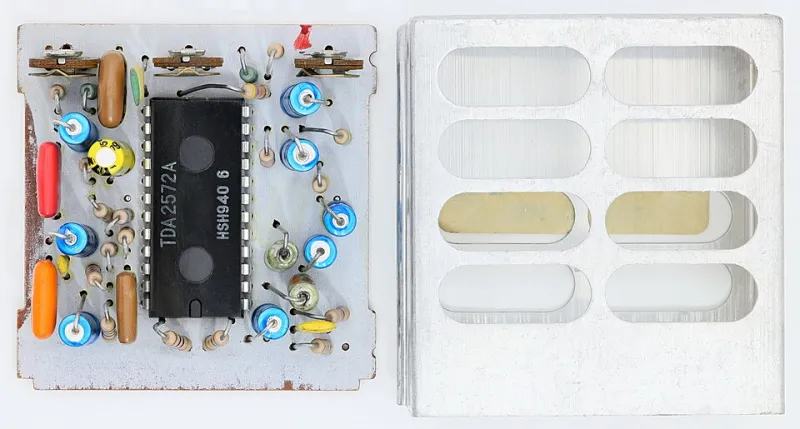
Prioritize parts that age well: film capacitors, inductors, connectors, crystals, through-hole semiconductors, and that holy grail of teardown culture — the toroidal transformer. Skip the 30-year-old electrolytics; they're leaking their way to failure regardless.
Once the board is stripped, it goes in the recycling box, not the trash. Most US counties run free e-waste days, and retailers like Staples and Best Buy take drop-offs. The board you stripped cost the recycler nothing extra and kept toxic flame retardants out of a landfill.
The Honest Math
Sixty pounds of mixed consumer boards came out to roughly $40–$70 in raw recoverable value for the recycler. Gas to the facility: about $55. Clearly, we are not retiring on e-waste.
But the parts we pulled before dropping the boards off — conservatively $200+ in connectors, magnetics, and semiconductors at retail prices — made the trip genuinely worth it. Plus we got to watch a shredder eat a VCR, which is its own kind of therapy.
Your dead gadgets aren't a gold mine. They're a parts bin with a free disposal plan attached. Treat them that way and everyone — including the shredder operator — wins.