Run the Numbers: Why Your Next 500-Board Batch Might Belong in America
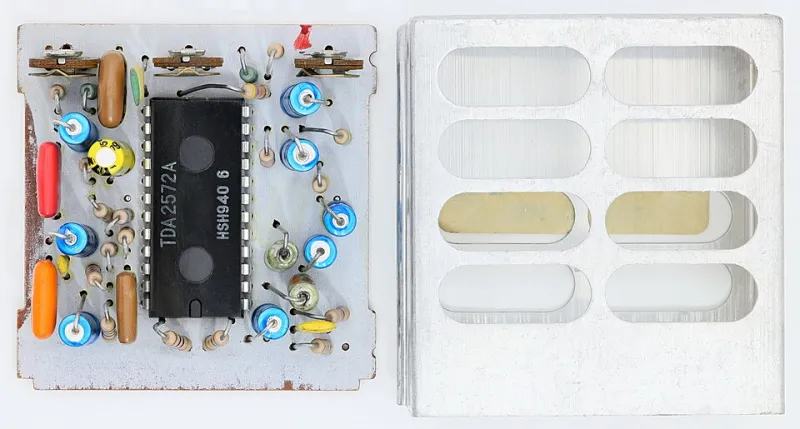
Photo: Mister rf, CC BY-SA 4.0, via Wikimedia Commons
Every hardware hobbyist who's graduated from one-off prototypes knows the ritual: upload your Gerbers to a Shenzhen fab, wait a week and a half, and get beautiful boards for pennies. It's been the obvious move for so long that questioning it feels like arguing with gravity.
But gravity has changed. Between Section 301 tariffs, de minimis loophole closures, ocean freight whiplash, and a genuine resurgence in US fab capacity, the math for a small production run deserves to be redone from scratch. So we did — with a hypothetical 500-unit, two-layer, 100x100mm board run, quoted in early 2025.
Scenario One: The Classic Shenzhen Run
Quotes from two major Chinese fabs came in around $1,100 for 500 bare boards, assembly quoted separately at roughly $2,000 including parts sourcing for a modest BOM. Add air freight and you're near $3,400 landed. Historically, this was untouchable.
Here's what changed: boards assembled in China and imported into the US now carry tariff exposure that simply didn't apply to bare PCBs a few years ago. Depending on HTS classification and the ever-shifting tariff schedule, add 7.5 to 25 percent or more on the assembled value. Our hypothetical run suddenly lands closer to $3,900 to $4,200 — and that's if customs doesn't flag the shipment for a documentation dance.
Then there's the de minimis change. The old $800 duty-free threshold that made small direct-from-China shipments painless has been gutted. Your friendly neighborhood batch of 50 assembled boards now goes through the same formal entry process as a container.
Scenario Two: Domestic Fab, Domestic Assembly
US-based fabricators have spent years being the expensive option. But the gap has narrowed. Quotes for the same 500 boards from two American fabs: $1,700 to $2,200. Yes, that's 60 to 90 percent more than Shenzhen on the bare boards.
But assembly is where it gets interesting. Without international freight, without customs brokerage, without tariff exposure, a domestic turnkey run landed around $4,300 total. That's within shouting distance of the China number — and it arrives in ten business days instead of five weeks, with English-speaking engineers a phone call away when your paste stencil file has a problem.
Scenario Three: The Hybrid Play
The option more small creators are quietly adopting: fab in China (bare PCBs face minimal tariff exposure), assemble in the US. Our quotes: $1,100 for boards plus $700 air freight plus roughly $2,400 for a US contract assembler doing 500 boards with consigned or turnkey parts. Total: around $4,200, with the tariff exposure limited to the board value rather than the assembled product.
This hybrid route also hedges risk. A single Shenzhen turnkey order is one point of failure. Splitting fab and assembly means a problem at either stage doesn't cost you the whole batch.
The Hidden Line Items
The sticker quotes miss the costs that actually decide elections:
- Time. Five weeks of freight and customs versus ten days of domestic turnaround. If you're crowdfunding, that's five weeks of backers refreshing tracking pages.
- Rework risk. When 30 boards come back with a wrong part loaded, fixing it domestically costs a courier and a day. Fixing it from Shenzhen costs an ocean.
- IP exposure. Your BOM and design files travel through more hands on the international route. For most hobby projects this doesn't matter. For your first commercial product, it might.
- Cash flow. Chinese fabs often want full payment up front with long lead times. Domestic assemblers increasingly offer net terms for repeat customers.
My Honest Take
I've been a Shenzhen fab loyalist for a decade, and I'm not saying abandon it — for prototypes and one-offs, it remains unbeatable and I'll keep using it. But for production runs in the low hundreds to low thousands, the automatic answer has stopped being automatic.
The tariff environment is volatile and nobody should build a business plan on this week's rates. But the underlying trend is real: domestic capacity has grown, freight has become a gamble, and the total-cost gap has compressed from 'not even close' to 'worth a spreadsheet.'
Run the numbers on your next batch. Include the freight, the duties, the delays, and the cost of a two-week surprise. You might be surprised which side of the Pacific your boards should be born on.