Four Microcontrollers Walk Into a Workshop: The Real Cost of a $5 Chip
There's a particular kind of optimism that strikes every maker in the checkout line at a certain Chinese marketplace: sure, I can learn a whole new toolchain for a chip that costs less than a gas station taco.
We decided to put that optimism to the test. The rules were simple: one project, four microcontrollers, identical feature set. A battery-powered temperature and humidity sensor that wakes up every few minutes, takes a reading, blasts it over WiFi or USB, and goes back to sleep for as long as physics allows. We scored each build on toolchain friction, documentation, sleep-mode power draw, and — because this is a US publication — whether you can actually get the chip from a domestic supplier before your enthusiasm dies.
The Contenders
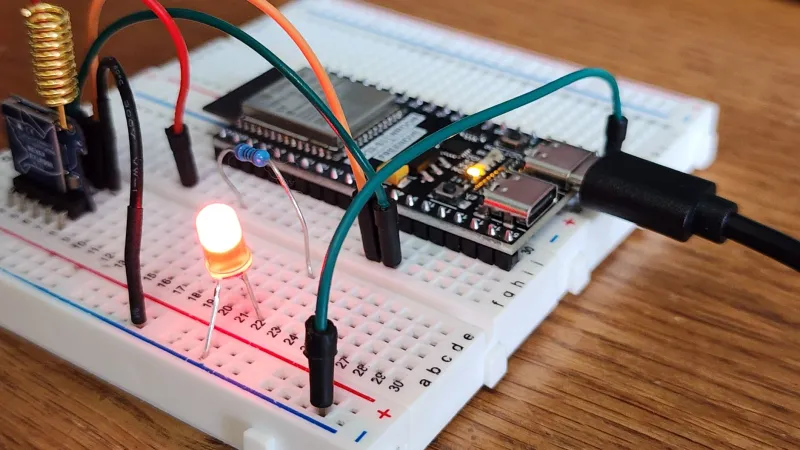
ESP32 (DevKit, ~$5): The default choice for a reason. WiFi, Bluetooth, a mountain of tutorials, and Espressif's Arduino/ESP-IDF ecosystem.
Raspberry Pi Pico / RP2040 (~$4): Raspberry Pi's dual-core Cortex-M0+ darling. Official C/C++ SDK, MicroPython, and CircuitPython support out of the box.
WCH CH32V003 (~$0.15, call it $1 with a dev board): The RISC-V chip that launched a thousand forum threads. Ten cents of silicon that shouldn't be this capable.
Microchip PIC16F886 (garage sale, effectively free): Pulled from a ziplock bag of assorted 2008-era components. Our control group — the chip your uncle's coffee maker might contain.
Toolchain Friction: Where Projects Go to Die
The ESP32 was boring in the best way. Arduino IDE, board manager, blink in four minutes. The WiFi provisioning code we needed had already been written a thousand times by people smarter than us.
The RP2040 was nearly as smooth, with one wrinkle: if you stay in MicroPython, you're golden. Drop into the C SDK and you're wrestling CMake, which is its own personality test. We'd call it medium friction — manageable, but you'll feel it.
The CH32V003 surprised us. The open-source toolchain (riscv-none-elf-gcc plus WCH's flashing tools) works, and the community tooling around it has matured dramatically. But "matured for 2024" is not "matured," and we burned an evening on a flashing tool quirk that the ESP32 would never have caused. Count on a full weekend day of yak-shaving if it's your first RISC-V rodeo.
The PIC16 required MPLAB, a PICkit programmer we had to buy, and reading a datasheet with the structural elegance of a phone book. Total setup time: an afternoon. And we say that as people who've done it before.
Sleep Mode: The Number That Actually Matters
For a battery sensor, deep-sleep current is everything. Here's what we measured with a decent bench meter:
| Chip | Deep sleep current | Notes |
|---|---|---|
| ESP32 | ~10 µA | Excellent, with occasional spikes |
| RP2040 | ~1.8 mA | No true deep sleep — the dirty secret |
| CH32V003 | ~15 µA | Respectable for the price |
| PIC16F886 | ~0.8 µA | The old guard still wins |
That RP2040 number is the one that stung. It's a fantastic chip, but for a battery project it's the wrong tool — you'll be swapping coin cells weekly instead of yearly. The PIC, a chip older than some of our interns, outlasted everything on a CR2032.
Documentation and Community
ESP32 wins by a landslide, and it's not close. RP2040's official documentation is genuinely lovely to read. The CH32V003 leans on community wikis and a very active Discord-adjacent scene — helpful, but you're often the first person to hit your specific bug. The PIC's documentation is exhaustive in the way that only decades of legacy product lines can be, assuming you enjoy datasheets written like legal contracts.
Availability From US Suppliers
All four are orderable stateside: Mouser and DigiKey stock ESP32 modules, Picos, CH32 dev boards, and PICs alike. The CH32 is the only one where you'll pay meaningful shipping relative to the part cost, and lead times on WCH parts can wobble. Everything else is next-day if you're willing to pay for it.
So Which Chip Earns a Bin Spot?
All of them — but for different jobs.
- ESP32 for anything wireless, anything with a deadline, anything you want done this week.
- RP2040 for USB gadgets, educational projects, and anything where battery life is someone else's problem.
- CH32V003 for high-volume builds where ten cents matters and you've got the patience to earn the toolchain. It's also just fun in a way the others aren't.
- PIC16 for ultra-low-power battery work and, honestly, for the satisfaction of keeping legacy skills alive.
The lesson we keep relearning: the sticker price of a microcontroller is maybe 5% of the cost of shipping a working project. Your time is the expensive part. Spend it on the chip whose ecosystem does the heavy lifting — and keep the ten-cent RISC-V board around for the weekend you feel like suffering productively.