Junk Caps Are Killing Your Builds: How to Catch Counterfeit Capacitors Before They Catch You
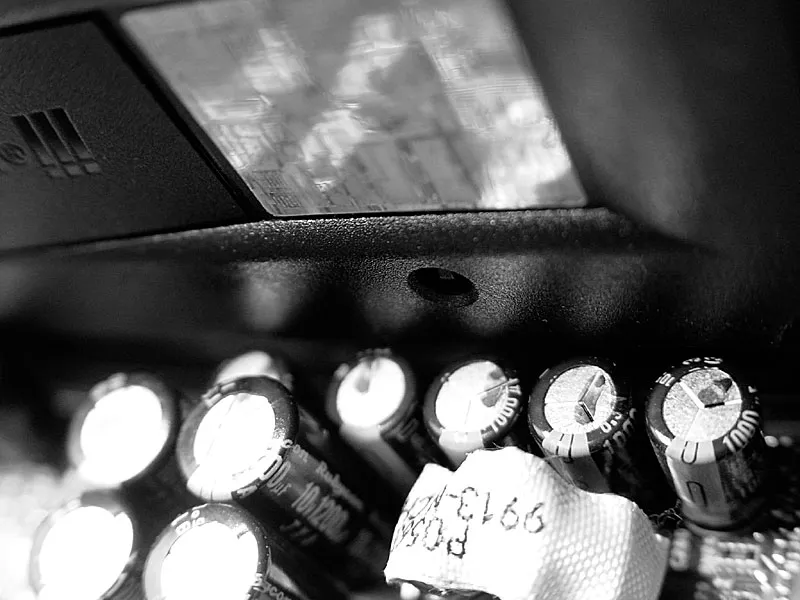
Photo: Holly Cheng, CC BY-SA 3.0, via Wikimedia Commons
There's a particular kind of frustration that sets in when a board you spent weeks designing just… dies. No smoke, no dramatic pop — it just stops working. You check your solder joints, reflow a few pins, swap out the MCU. Nothing. Then, almost by accident, you press your thumb against a capacitor near the power rail and feel it. A slight dome. A tiny bulge that definitely wasn't in the datasheet.
Welcome to the capacitor plague — and no, it never really went away.
Most makers remember hearing about the mid-2000s epidemic of bad electrolytic caps that destroyed millions of motherboards worldwide, traced back to a stolen and incomplete electrolyte formula circulating through Taiwanese factories. That crisis eventually faded from the headlines, but the underlying problem — counterfeit and substandard passive components leaking into the supply chain — has been a quiet, persistent threat ever since. If anything, the explosion of cheap online marketplaces has made it worse.
Why Cheap Caps Are Such a Big Deal
Capacitors are humble little components. They filter noise, stabilize voltage rails, handle decoupling duties, and generally do the unglamorous work that keeps everything else running clean. Because of that, builders often treat them as commodity parts — grab a bag of 100µF electrolytics off a popular online storefront, toss them on the board, move on.
That attitude is exactly what counterfeiters are counting on.
A fake or substandard capacitor might measure correctly on a basic bench meter right out of the bag. Its capacitance will read close enough, its ESR (equivalent series resistance) might even pass a quick check. But under thermal stress, load cycling, or extended operation, things fall apart fast. The electrolyte dries out prematurely. The dielectric breaks down. Ripple current ratings that were never realistic to begin with cause internal heating that accelerates failure.
For a one-off hobby build, a blown cap is annoying. For a product you're selling or a piece of equipment someone is depending on, it's a serious liability.
Where the Bad Stuff Is Coming From
The honest answer is: everywhere you're not looking carefully.
Marketplaces like AliExpress and Amazon third-party listings are obvious culprits, but the problem runs deeper than that. Gray-market components pulled from recycled electronics get rebranded and relisted as new stock. Overruns and rejects from legitimate factories get sold off through unofficial channels. Some suppliers are themselves victims — buying what they think is genuine stock and passing it along in good faith.
Even domestic distributors aren't immune. A 2022 report from the Semiconductor Industry Association flagged counterfeit components appearing in distributor inventories that had multiple layers of seemingly legitimate paperwork. The fakes have gotten sophisticated.
Brand names that get knocked off most frequently include Nichicon, Panasonic, Rubycon, and Würth Elektronik — exactly the brands builders reach for when they want quality. Seeing a Nichicon logo on a cap is not, by itself, reassurance anymore.
The Bench Tests That Actually Catch Fakes
You don't need a $10,000 component analyzer to weed out bad caps. A few targeted tests will catch the most dangerous fakes before they make it onto your board.
ESR Testing This is your first and best line of defense. A real ESR meter (the Peak ESR70 is a popular choice in the US maker community, and budget options from Tenma work fine too) will reveal caps with abnormally high equivalent series resistance — a dead giveaway for dried-out or poorly manufactured electrolyte. Compare readings against the manufacturer's datasheet spec. Anything more than 2x the rated ESR at room temperature is a red flag.
Capacitance Under Load A basic capacitance meter tells you what a cap measures at rest. What you really want to know is how it behaves under realistic conditions. Apply a load that draws meaningful ripple current and monitor the voltage rail with an oscilloscope. Excessive ripple — more than the cap's spec should allow — points to a part that isn't living up to its ratings.
Physical Inspection Get a loupe or a decent USB microscope (the $30 ones on Amazon are actually fine for this). Look at the printing on the body. Genuine caps from reputable brands have crisp, consistent labeling. Counterfeits often show slightly blurry text, inconsistent font weights, or markings that don't match the brand's current style guide — which you can verify against the manufacturer's official documentation. Also check the sleeve for bubbling, uneven seams, or color that looks slightly off compared to a known-good sample.
Thermal Stress Test For critical applications, run a soak test. Put your populated board through several heat cycles — warm it up to operating temp, let it cool, repeat. A bad cap will often reveal itself through early bulging or measurable ESR drift after just a few cycles. It's tedious, but it's far less tedious than a field failure.
Buying Smart: Sources You Can Actually Trust
The most reliable fix is sourcing from authorized distributors. In the US, that means Digi-Key, Mouser, and Newark for the vast majority of builds. Yes, you'll pay more than you would on a marketplace. Yes, it's worth it.
Both Digi-Key and Mouser offer traceability — you can pull the date code and lot number off your order and, in many cases, trace it back to the manufacturer. That's not a guarantee of perfection, but it's a meaningful layer of protection that no gray-market listing can offer.
If budget is genuinely tight, LCSC (the component arm of JLCPCB) has become a reasonably trustworthy source for passive components, particularly for builds that don't involve high-stress power applications. Their pricing is competitive and their supply chain, while not as auditable as Mouser's, is generally more accountable than random marketplace sellers.
For anything going into a product, a medical device, automotive application, or anywhere that failure has real consequences — there is no substitute for authorized distribution. Full stop.
Building a Habit, Not Just a One-Time Check
The builders who consistently avoid cap-related failures aren't doing anything magical. They've just internalized a few habits: they buy from known sources, they spot-check new reels with an ESR meter before they go in the parts bin, and they treat any component with suspicious labeling as guilty until proven innocent.
It also helps to maintain a reference collection. Keep a few known-good caps from a trusted distributor for each common value you use. When a new batch comes in, compare physical appearance side by side. It sounds low-tech because it is — but it works.
The capacitor plague never really ended. It just got quieter and more distributed. A little paranoia and a $25 ESR meter are genuinely the best insurance policy your workbench can have.