Four Seasons, Five Boards, One Brutal Backyard: Our Long-Term Outdoor Electronics Survival Test
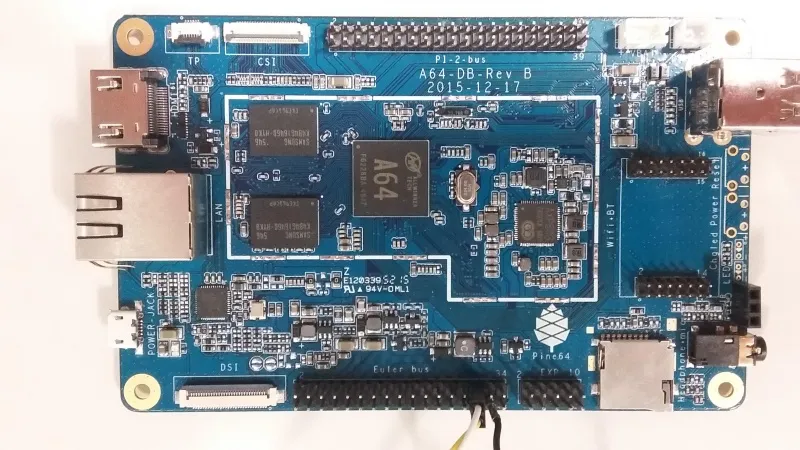
Photo: OpenWrt, CC BY-SA 4.0, via Wikimedia Commons
Weatherproof is the most abused word in the maker hardware aisle. Vendors slap an IP65 rating on an enclosure and call it a day, but anyone who's cracked open a 'sealed' box after a humid summer knows the truth: condensation doesn't care about your ingress rating. So we designed the test we always wished someone else would run.
The Setup: Five Boards, Three Enclosure Styles
We picked five popular SBCs spanning different price points and build qualities, then mounted them on a fence post in a backyard outside Columbus, Ohio — full sun in summer, snow and road salt spray in winter, and spring and fall humidity that would make a rainforest jealous.
Each board went into one of three enclosure strategies:
- Fully sealed — a gasketed IP67 polycarbonate box, no vents, with a packet of silica gel tossed in at installation.
- Vented — an IP54 box with breather membranes (the kind with ePTFE vents, like those used on outdoor lighting controllers).
- 'Waterproof' budget case — a $9 ABS enclosure with a foam gasket, because somebody always tries it.
Every board got the same treatment: bare PCB, no conformal coating, running a simple temperature-and-humidity logger so we had data even if the board died. Every quarter, we opened each box, photographed the boards, logged internal humidity, and re-sealed everything.
Spring: The Condensation Surprise
The first surprise came in April, after the transition from cold nights to warm days. The sealed boxes — the ones we assumed were safest — developed visible condensation on their lids. Why? Trapped humid air plus a 15°C temperature swing across the polycarbonate wall. The silica gel packets were saturated by May in two of the three sealed boxes.
The vented enclosures, counterintuitively, stayed dry. The breather membranes let water vapor out when internal pressure and humidity rose, equalizing with ambient air instead of trapping it. This is exactly why telecom outdoor cabinets use them.
The budget ABS case? Water intrusion by the first hard rain. Foam gaskets compress unevenly, and the screw bosses wick water right past the seal. We documented green corrosion on one board's USB header within six weeks.
Summer: Heat Is the Silent Killer
Ohio summers pushed the interior of the sun-facing sealed box to 68°C on the hottest afternoons. Two boards throttled hard; one of the cheaper SBCs started randomly corrupting its SD card, a failure mode we've since learned is distressingly common above about 60°C sustained.
The vented enclosure ran 11°C cooler on average thanks to convection through the membrane vents. If your outdoor project lives in sunlight, thermal management matters more than water — full stop.
Fall: Corrosion Inspection Time
The October teardown told the real story. The board in the flooded budget case was beyond saving — corroded through on the bottom layer. The sealed-box boards looked fine externally, but under a magnifier we found early whiskering on uncoated connector pins and slight tarnish on exposed test pads.
This is where conformal coating entered the story. For our winter phase, we coated the surviving boards with two different products: an acrylic spray conformal coating on one, and brush-on silicone on another, leaving connector areas masked.
Winter: Freeze-Thaw and the Final Verdict
Winter delivered freeze-thaw cycles that turned any trapped moisture into an expansion problem. The one sealed box that still had damp desiccant developed frost on the interior wall every cold snap. The vented boxes stayed dry throughout.
After twelve months, here's our scorecard:
- Vented enclosure + acrylic conformal coating: perfect survival, zero corrosion, most stable operation. Our clear winner.
- Vented, uncoated: survived, minor tarnish on exposed copper.
- Sealed with fresh desiccant: survived but ran hot and needed desiccant changes roughly quarterly.
- Sealed with stale desiccant: condensation events, one SD card failure.
- Budget 'waterproof' case: total loss. Do not use foam-gasket ABS boxes outdoors, ever.
What We'd Do Differently
Three lessons for your next outdoor build:
- Breathers beat seals. A gasketed box with an ePTFE vent membrane manages humidity far better than a hermetically sealed box with a prayer and a desiccant pack.
- Coat the copper. Even a light acrylic conformal coat on exposed traces and connectors dramatically slows corrosion, especially anywhere near road salt.
- Plan for heat. Shade the enclosure, use white or light-colored cases, and if your board runs warm, venting isn't optional.
Desiccant isn't useless — but it's a consumable, not a solution. If you can't service the box regularly, design the enclosure to breathe instead.
The Bottom Line
The enclosure industry sells peace of mind with IP ratings, but our year outdoors showed the real-world winner is a hybrid: a quality vented enclosure, conformal-coated boards, and smart placement out of direct sun. Total added cost over the budget approach? About $25. Total boards saved? All of them — next year.