Solder Mask Is Not Just Paint: Five Colors, One Thermal Camera, and a Lot of Rework
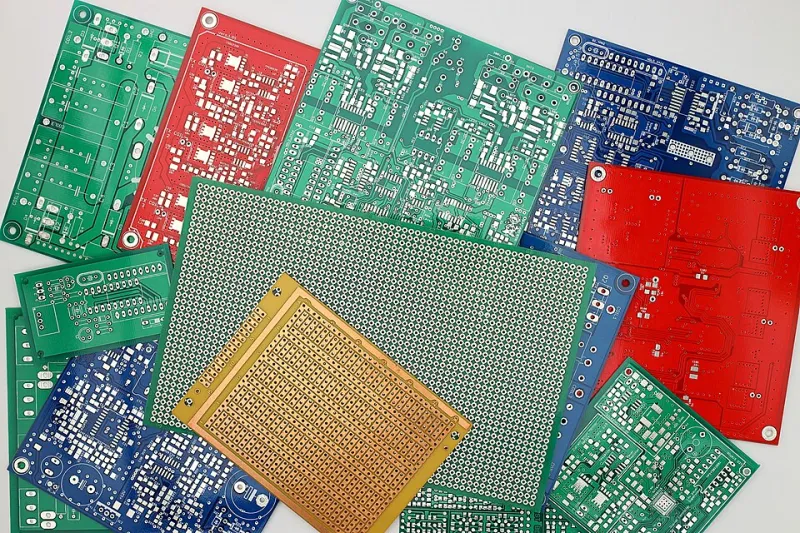
Photo: Mister rf, CC BY-SA 4.0, via Wikimedia Commons
Why mask color became a checkout option
Solder mask color used to be an afterthought. In 2026, fab houses list green, black, blue, white, red, matte black, and enough purple to make you feel like you are ordering a custom skateboard. Most of that is cosmetic, but not all of it. Color can change how easy a board is to inspect, how well silkscreen reads, and how much rework you can do before the finish looks like a crime scene.
We wanted to separate the real effects from the vibes. So we built five copies of the same moderate board, one in each color, and ran them under identical loads. Then we pointed a thermal camera at them, added thermocouples, and tried to repair a few joints. The results were less dramatic than the internet would suggest, but the inspection differences were real.
The test board
Our board was a 60 mm by 40 mm two-layer design with a buck converter, a small MCU, a linear regulator, and a handful of LEDs. Same copper, same stackup, same HASL finish, same component loadout. The only variable was solder mask color: green, black, blue, white, and red. We used white silkscreen on all five so we could compare contrast without changing two variables at once.
Each board ran a 2 A load for 30 minutes in still air at roughly 23°C. We logged the buck inductor, the linear regulator, the MCU, and a couple of copper pours with K-type thermocouples. The thermal camera was set to the same emissivity for the first pass, then corrected with tape on each board for the second pass.
The thermal camera surprise
The first thermal images looked like a clear win for color. The black board appeared 6°C to 9°C hotter around the regulator than the white board. The white board looked cool and innocent. That is exactly the kind of result that turns into a bad forum post.
After we calibrated emissivity with tape and compared the thermocouple data, the spread collapsed. The hottest thermocouple readings were within 1.5°C across all five boards. The black board was not running meaningfully hotter. It was just easier for the camera to read, and the white board was reflecting more of the background. Solder mask color is not a thermal management strategy. Copper area, airflow, and component placement are.
That does not mean color does nothing. At higher temperatures, radiative heat transfer can shift a little, and black surfaces can behave differently under direct light. For a normal maker board running at normal temperatures, the effect is small enough that you should not pick a mask color to fix a thermal problem. Fix the copper first.
Inspection and rework
This is where color earns its keep. Black mask looked great on the bench and terrible under the microscope. Traces disappear into the surface, solder bridges hide in shadows, and scorch marks blend in until they are large. If you plan to debug a dense board, black is a cosmetic choice that makes you work harder.
White mask was the opposite. Flux residue, fingerprints, and heat discoloration all showed up immediately. That is useful when you are checking a fresh assembly, and annoying when you are trying to keep a prototype looking clean. Blue sat in the middle: good trace contrast, decent silkscreen readability, and enough contrast to spot a bridge without a side light.
Green remained the default for a reason. It has familiar contrast, fab houses handle it well, and most inspection routines are tuned for it. Red looked sharp and read well with white silkscreen, but it can hide thin traces under certain lighting. None of these are dealbreakers. They are just tradeoffs you should pick on purpose.
Fab-house quirks
Color can also affect the order itself. White mask sometimes costs more or adds lead time because it shows every imperfection. Matte black can scuff and show handling marks before the board even ships. Some fabs warn that dark masks hide scratches and make final visual inspection less reliable. If you are ordering a batch for a product, ask for a sample panel in your chosen color before you commit.
Silkscreen contrast matters too. White on black is hard to beat for readability. Black on white is good if the fab can hold the resolution. White on white is a prank. If you are using a dark mask, check that your reference designators are large enough to survive the contrast shift.
What we would pick
For a debugging board, green or blue with white silkscreen is the low-drama choice. For a show piece, black or white can look great, but plan for inspection with a bright side light and a microscope. And do not trust a thermal camera without a thermocouple or an emissivity check. The camera is a useful liar. The mask color is not the villain.