The Two-Cent Part That Kills More Builds Than Bad Code: A Connector Survival Guide
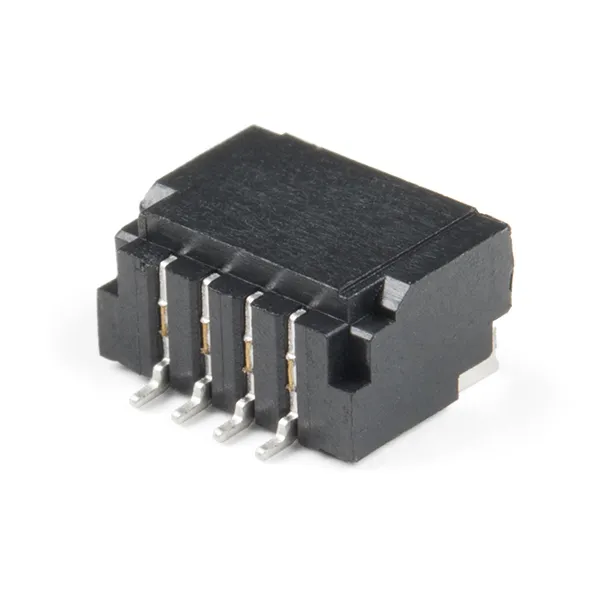
Photo: SparkFun Electronics from Boulder, USA, CC BY 2.0, via Wikimedia Commons
Every maker has a story like this one. Mine involves a weather station that ran flawlessly for three weeks, then went dark on a Sunday morning. No code bug. No dead battery. Just a single Dupont connector on the rain gauge line that had quietly worked itself loose, oxidized, and started lying about the signal. Two cents of plastic and tin. An entire weekend of my life.
So we did what any obsessive hardware site would do: we built a robot arm to unplug and replug connectors until they begged for mercy, then asked dozens of makers across the US for their worst connector horror stories. The results were humbling.
The Test: 500 Cycles and a Milliohm Meter
Contact resistance is the number you never check until it matters. A fresh JST-XH pin might measure 8 milliohms. After a few hundred mating cycles, vibration, and a humid garage summer, that number can double, triple, or worse. Every extra milliohm is heat, voltage drop, and noise on your sense lines.
We put four common families through 500插-unplug cycles on a rig made from a salvaged linear actuator, measuring contact resistance at 50-cycle intervals:
- Dupont (0.1" breadboard-style): Started around 12 mΩ, drifted past 40 mΩ by cycle 300. The friction fit is the whole problem — there's nothing keeping the contact pressure consistent.
- JST-XH: Excellent retention, modest drift from 9 to 15 mΩ. The box-shaped housing and real locking mechanism earn their keep.
- JST-PH (2.0mm): Similar story, slightly higher baseline resistance due to smaller contacts.
- Screw terminals: Rock solid if you torque them properly — but that's a big if, which we'll get to.
What Real Makers Told Us
We collected horror stories from a maker forum thread, a Midwest hamfest, and our own inbox. The themes were remarkably consistent.
The number one killer? Dupont connectors on anything that moves or vibrates. A robotics hobbyist in Ohio described a competition robot that lost its entire sensor array mid-match because one header socket backed off a millimeter. Another maker lost a 3D printer heated bed to a screw terminal that hadn't been retorqued after the initial thermal cycles — the classic failure where copper wire cold-flows, the screw loosens, the contact area shrinks, and things get hot enough to melt the block.
The second most common complaint: fake or off-brand JST housings that don't maintain proper retention force. The pins look identical. The clicks feel the same. Then the connector falls off your drone's flight controller two hundred feet up.
The Rankings: Where Your Extra Dime Goes
Here's our honest tier list for hobby builds:
Tier one — pay the extra cents. Genuine JST-XH or JST-VH for anything carrying meaningful current or living in a vibrating environment. Molex KK and Micro-Fit for higher currents. These cost maybe 15 to 40 cents more per connection in quantity and they simply don't come back haunted.
Tier two — fine with caveats. Screw terminals are underrated for bench prototypes and one-off builds, but use ferrules or at least tin the wires, and re-torque after the first thermal cycle. Dupont connectors are acceptable for breadboard-stage work and internal signals that never see vibration — just crimp them yourself with a proper tool. Those pre-crimped jumper wires are for the breadboard, not the shipping product.
Tier three — avoid. Anything with barbed contacts sold in bulk with no brand name, and any connector where the 'lock' is a suggestion rather than a mechanism.
The Crimp Is the Connector
Here's the dirty secret nobody puts on the product page: a 30-cent genuine JST connector with a bad crimp is worse than a 10-cent no-name with a perfect one. If you're serious about reliability, buy a decent ratcheting crimper — the Engineer PA-09 is the community favorite for good reason — and practice on scrap wire until your pull tests stop being embarrassing.
A proper crimp has the wire strands cold-welded into the barrel, insulation captured but not cut, and a pull strength measured in pounds, not grams. A bad crimp fails exactly like the horror stories above: intermittently, under load, at the worst moment.
Practical Rules for Your Next Build
- Anything with moving parts or a motor gets a locking connector. No exceptions.
- Anything over 2 amps gets a real terminal or a Micro-Fit, not a JST-PH you sawed at the current rating.
- Re-torque screw terminals after first power-on and thermal cycling.
- Buy genuine or reputable-brand housings — the counterfeit tolerance problems are real.
- Strain-relieve everything. Most connector failures start as wire failures at the crimp.
Connectors will never be glamorous. Nobody's building a YouTube channel around milliohm drift. But if you spend twenty extra cents on the right family and five minutes on a proper crimp, you'll skip the Sunday-morning debugging session that starts with 'it worked yesterday.' Your weekends are worth more than that.