Twelve Chips, Three Bucks Each, One Brutal Bake-Off: The Sub-$3 Microcontroller Showdown

Photo: M. Barnes & Co; Barnes' Nurseries; Henry G. Gilbert Nursery and Seed Trade Catalog Collection, No restrictions, via Wikimedia Commons
Five years ago, 'cheap microcontroller' meant an ATtiny85 and a compromise. Today, the sub-$3 aisle at LCSC and AliExpress is a buffet of ARM Cortex-M0+ parts, RISC-V upstarts, and mystery silicon from Shenzhen that benchmarks like parts five times the price. But datasheets lie, toolchains bite, and 'works in the demo' is not the same as 'works in your project.'
So we bought twelve of them, soldered up a small army of breakout boards, and ran every chip through the same gauntlet of tasks a real maker would actually care about. Here's how it shook out.
The Contenders
The field included the WCH CH32V003 (the RISC-V darling, around $0.15 in quantity — yes, fifteen cents), the Puya PY32F003 (a Cortex-M0+ that keeps showing up in $2 gadgets), a couple of ATtiny classics, the CH32V203, the W801 with built-in Wi-Fi, an STM32 clone-adjacent part, and several others we'll call 'the gamble tier.'
Test One: Driving NeoPixels
The WS2812 protocol is unforgiving — 800kHz timing with tolerances measured in tens of nanoseconds. This is where clock speed and DMA support separate the pros from the pretenders.
The CH32V003 handled it with the community's well-tuned bit-banging routines, driving 60 LEDs smoothly at 48MHz. The PY32F003 needed a hand-rolled assembly delay loop but managed 30 LEDs without glitching. The W801, ironically, struggled — its Wi-Fi-focused architecture makes precise timing awkward, and we gave up on clean NeoPixel output after an evening of fighting its SDK.
Winner: CH32V003. For a chip that costs less than a candy bar, the peripheral story is shockingly complete.
Test Two: Battery Sleep-Off
We wired each chip to a CR2032 with a humidity sensor and measured real-world sleep current with a quality DMM's microamp range. This is where the no-name chips earn or lose their reputation.
The ATtiny remains genuinely excellent here — a few microamps in deep sleep, waking on interrupt like a champ. The PY32F003 surprised us, matching the ATtiny within a microamp or two once we found the right register incantations. The CH32V003's sleep is respectable but not class-leading. One mystery-brand part drew a humiliating 400 microamps in its 'deepest' sleep mode, essentially a battery vampire in a 3-cent trench coat.
Winner: PY32F003, with the ATtiny a very close second and a decade of community documentation as a tiebreaker.
Test Three: Surviving a Breadboard
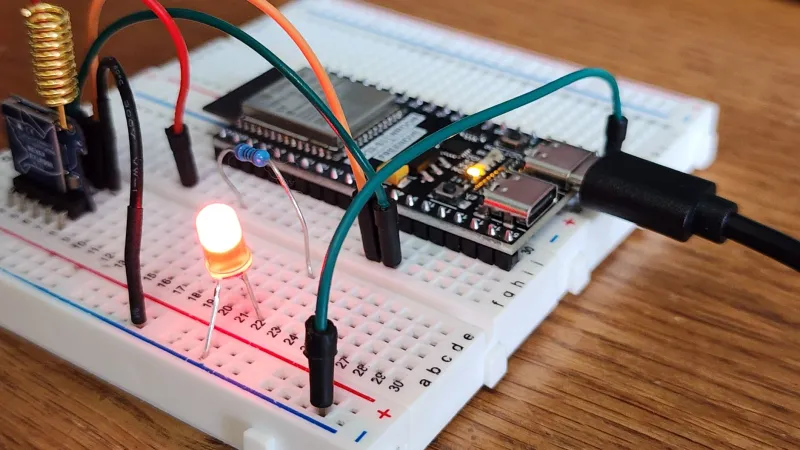
This one's unscientific but honest: we stuck each chip in a breadboard, ran a blinking LED for a week, and noted every mysterious reset, brownout, and 'why is GPIO C4 dead' moment.
The STMicro-adjacent parts behaved flawlessly. The CH32V003 needed decoupling caps placed with religious care — breadboard inductance plus its internal LDO made it twitchy until we added bulk capacitance. The W801 refused breadboarding entirely; it's a module chip, full stop, and treating it otherwise costs you a weekend.
The Toolchain Tax
Here's the part the spec sheets never mention: your time. The ATtiny and PY32 have mature Arduino core support — blink in ten minutes. The CH32V003 has a passionate community (shoutout to the open-source tooling efforts) but you'll be reading GitHub issues. The W801's SDK is a document translated twice and a Makefile from 2019.
Budget an evening for the mainstream picks. Budget a weekend for the gamble tier. That's the real price.
The Verdict
Buy the CH32V003 if you want astonishing capability per penny and don't mind community tooling. It's the 2025 default for dumb-but-cheap logic.
Buy the PY32F003 if battery life matters and you want Arduino-core comfort. It's the quiet overachiever of the bunch.
Keep the ATtiny for the projects where you want zero surprises at 2 a.m.
Skip the mystery chips unless you enjoy debugging as a hobby. Life's too short for an SDK with no community behind it.
The sub-$3 MCU market is genuinely exciting in a way it hasn't been since the original Arduino wave. The silicon is real, the prices are absurd, and for simple sensor nodes, LED art, and gadget guts, these chips are more than good enough. Just read the forums before you buy, and never bet a deadline on the gamble tier.