Ship It: A Maker's Honest Guide to Crowdfunding Hardware Without Burning Your Backers
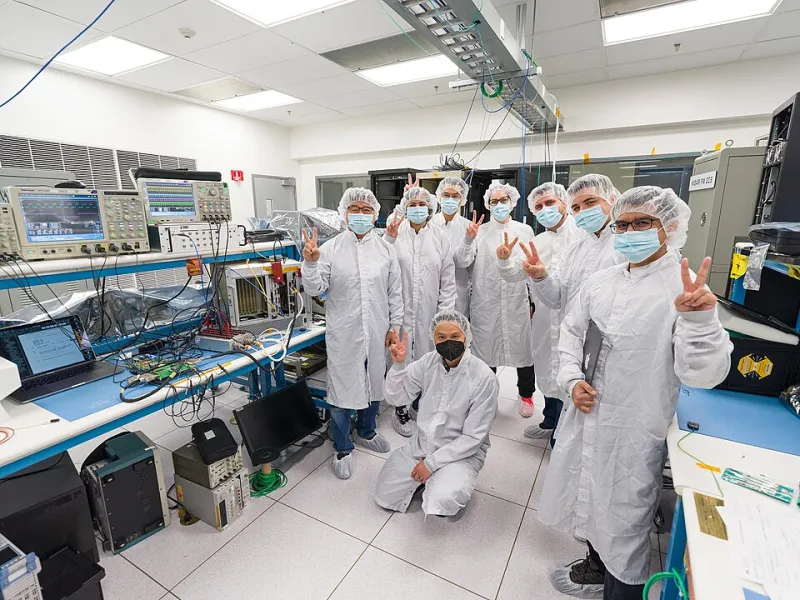
Photo: NASA/JPL-Caltech, CC, via Wikimedia Commons
Somewhere between "this works on my desk" and "500 units shipped to backers across 30 states" lies a stretch of terrain that has humbled some genuinely brilliant engineers. Hardware crowdfunding looks, from the outside, like a relatively straightforward path: build a cool thing, put it on Kickstarter, collect money, ship boxes. Makers who've actually done it will tell you it's more like: build a cool thing, discover three reasons it can't be manufactured at scale, rebuild it, miscalculate your BOM cost, run out of runway, and somehow still ship — six months late and with a support inbox full of understandably frustrated backers.
None of that has to be your story. But it will be, unless you go in with a clear-eyed understanding of what hardware crowdfunding actually demands.
Start With a Prototype That's Honest About Its Limits
The prototype you use to launch your campaign is not your production design. It shouldn't be. But it needs to be honest — to you, to your potential manufacturing partners, and to the people who are going to back you based on it.
A lot of first-time hardware campaigners make the mistake of filming a demo of their most optimistic prototype and calling it done. The board works great in a controlled environment, the firmware is mostly stable, the enclosure is a beautiful one-off machined by a friend. Backers see the video and imagine that's what they're getting. What they actually get — if the project ships at all — is a mass-manufactured version that had to make compromises the original never anticipated.
Before you launch, push your prototype hard. Stress-test the power supply. Run the firmware for 72 hours straight. Hand your board to someone who didn't build it and watch where they get confused. Every failure you find now is a failure you don't have to explain to a backer eight months from now.
Better yet, build a second prototype using components and processes that are actually manufacturable at scale. Can you source every part on your BOM through Digi-Key or Mouser at the quantities you'll need? Is your PCB design within the tolerances of a mid-tier fab like PCBWay or JLCPCB? If the answer to either question is no, you're not ready to launch.
Finding a Manufacturing Partner Before You Need One
This is the step most makers skip because it feels premature. It isn't.
Talking to contract manufacturers (CMs) before your campaign is live does three important things. First, it forces you to think through your design for manufacturability (DFM) while you still have time to change things. Second, it gives you real cost data for your pricing model instead of guesses. Third, it means you have a relationship and a rough quote in hand when your campaign funds and you suddenly need to move fast.
For most US-based maker projects, the manufacturing conversation typically involves either domestic assembly (more expensive, faster iteration, easier communication) or overseas production, most commonly through Chinese CMs. Services like Seeed Studio's Fusion and MacroFab (a US-based option worth knowing about) have built workflows specifically for small-batch hardware projects and are worth contacting early.
Ask potential partners about their minimum order quantities, their typical lead times for components, and — critically — what happens when a part goes out of stock mid-production. Supply chain disruptions aren't hypothetical; they're a when, not an if.
Modeling Your Costs Like You Mean It
Hardware is expensive in ways that software isn't, and crowdfunding platforms are littered with the wreckage of campaigns that priced their rewards based on optimistic assumptions.
Your cost model needs to include: PCB fabrication, component costs at your actual run quantity (not the per-unit price at 10,000 units if you're making 300), assembly labor, enclosure or mechanical parts, packaging, shipping — including international shipping if you're offering it — platform fees (Kickstarter takes 5%, plus payment processing), and fulfillment. Then add a contingency buffer of at least 20 percent, because something will cost more than you expected.
A common mistake is using the unit cost from your prototype run to price campaign rewards. Prototype economics are nothing like production economics. A PCB that cost you $8 to fab as a one-off might come down to $2 at 500 units — but your assembly costs, component sourcing, and logistics will add back more than you think.
Several makers who've successfully shipped hardware campaigns recommend running your numbers through a spreadsheet until the math makes you uncomfortable, then raising your reward prices anyway. Backers on hardware platforms generally understand that quality costs money. What they don't forgive is a project that runs out of funds halfway through production.
What Backers Actually Expect (And What They'll Forgive)
Here's something experienced hardware campaigners will tell you: backers are more patient than you think, and less patient than you hope.
Delays are expected. The hardware crowdfunding community has been around long enough that most backers have been through at least one campaign that shipped late. What erodes trust isn't a delay announcement — it's silence. Regular, honest updates, even when the news is bad, maintain goodwill in a way that radio silence never can.
What backers genuinely struggle to forgive is a product that doesn't do what the campaign page said it would, or a campaign that goes dark entirely. Both of those outcomes are survivable if you communicate early and often. Neither is survivable if backers find out from a Reddit thread instead of from you.
Build your update schedule into your project plan from day one. A monthly backer update — even a short one — keeps your community warm and gives you a forcing function to assess your own progress honestly.
The Launch Window and Platform Choice
Kickstarter remains the dominant platform for hardware projects in the US, largely because of its brand recognition and the trust backers associate with it. Indiegogo is a viable alternative, particularly if you want to use their InDemand feature to continue selling after your campaign ends — useful for hardware products with longer shelf lives.
Timing matters more than most people realize. Launching in September or October positions you to catch holiday gift-buying interest. Launching in January, when consumer spending is recovering from the holidays, is historically tough for hardware campaigns. Give yourself at least six weeks of pre-launch activity — building an email list, engaging with relevant communities on Reddit and Discord, reaching out to tech blogs (hey, hi) — before your campaign goes live.
A pre-launch landing page with an email signup is non-negotiable. Campaigns that launch to a warm audience of people who've already expressed interest convert dramatically better than cold launches. Even 200 people on an email list can create enough early momentum to push you past the psychological threshold of "this is going to fund" in the first 48 hours, which matters enormously for platform algorithm visibility.
Shipping Is a Product
The last mile of a hardware campaign — actually getting boxes into backers' hands — deserves as much planning as the board design itself. Work with a fulfillment partner if you're shipping more than a couple hundred units. Services like Whiplash or ShipBob handle warehousing and domestic fulfillment at reasonable rates for small-batch hardware projects and will save you from spending three weekends in a row packing boxes in your garage.
Document your unboxing experience. A well-packaged product with a clear quick-start guide communicates quality before the backer even powers it on. A board rattling around in a plastic bag with a folded paper insert communicates something else entirely.
You built something worth backing. Make sure the whole experience — from campaign page to the moment it arrives on someone's workbench — reflects that.