RISC-V Is No Longer a Science Experiment: The Open Processor Revolution Hits the Workbench
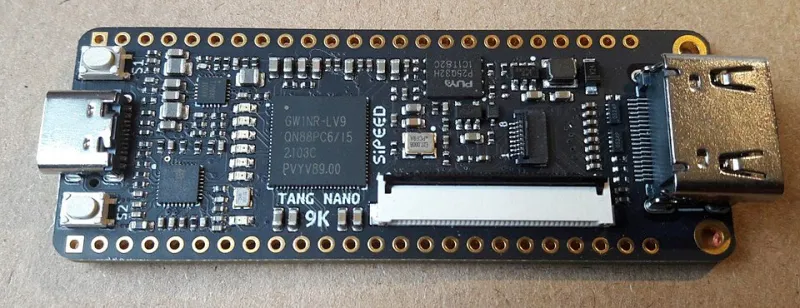
Photo: Popolon, CC0, via Wikimedia Commons
For years, RISC-V felt like the perpetual "next big thing" in the maker world — always promising, never quite ready. You'd see the architecture pop up in conference talks, lurk in the footnotes of SoC datasheets, and occasionally appear on a dev board that shipped with half-finished toolchain support and a community forum with three posts. Enthusiasts were intrigued. Practically everyone else stuck with ARM.
That story is changing fast. Heading into 2025, the RISC-V ecosystem has matured to a point where real tinkerers — not just academics and silicon architects — can build meaningful projects on open-source processors without spending half their time wrestling with compiler flags. Here's where things actually stand.
What Makes RISC-V Different (And Why It Matters for Makers)
At its core, RISC-V is an open instruction set architecture (ISA). Nobody owns it. There's no licensing fee, no royalty structure, and no single company controlling the roadmap. Compare that to ARM, where Arm Holdings licenses the architecture to chip makers, or x86, which is essentially a two-company club between Intel and AMD.
For makers, the philosophical appeal is real but secondary. What matters more practically is that the open nature of the ISA has encouraged an explosion of chip designs targeting all kinds of use cases — from ultra-low-power microcontrollers to application processors capable of running Linux. That diversity is starting to translate into actual hardware you can buy at reasonable prices.
The other big deal: because the ISA is open, toolchain development has become a community effort. GCC and LLVM both have solid RISC-V support now. That wasn't true even three years ago.
The Boards Worth Looking At Right Now
StarFive VisionFive 2 is probably the board that's done the most to shift perception. It's a Linux-capable single-board computer built around the JH7110 SoC, featuring a quad-core RISC-V processor running at 1.5GHz, a GPU capable of basic graphics acceleration, and a respectable set of I/O including gigabit Ethernet, USB 3.0, and an M.2 slot. Prices have settled in the $55–$70 range depending on the RAM configuration, which puts it in direct conversation with the Raspberry Pi 4. Performance isn't quite there — don't expect to use it as a desktop replacement — but for headless server projects, home automation hubs, or network tools, it's genuinely practical.
Milk-V Duo sits at the opposite end of the spectrum. This tiny board runs a dual-core RISC-V chip (one core for Linux, one for real-time tasks) and costs around $5. It's aimed squarely at embedded projects where you want Linux-level flexibility without the overhead of a full SBC. Think edge sensor nodes, small robotics controllers, or IoT gateways. The form factor is roughly comparable to a Raspberry Pi Zero but with a fundamentally different architecture under the hood.
Sipeed LicheeRV Nano is another compact option worth knowing about, particularly if you're interested in computer vision projects. It pairs a RISC-V application core with a dedicated neural processing unit, making it an interesting target for lightweight inference workloads.
For pure microcontroller work, the ESP32-C3 and ESP32-C6 from Espressif deserve a mention. These are RISC-V chips hiding inside one of the most popular maker-friendly ecosystems on the planet. If you've already been using the Arduino IDE or ESP-IDF, you've probably already run RISC-V code without realizing it.
Where the Ecosystem Still Has Gaps
Honesty matters here. RISC-V is not plug-and-play in the way a Raspberry Pi 5 or an Arduino Mega is. A few friction points to know before you commit:
Software availability is still uneven. Most major Linux distributions offer RISC-V builds now — Debian, Ubuntu, and Fedora all have some level of support — but you'll occasionally hit packages that haven't been compiled for the architecture yet. If your project depends on a specific library with native dependencies, verify it builds on RISC-V before you design around it.
Community size is smaller. Stack Overflow answers, YouTube tutorials, and forum threads are thinner on the ground compared to ARM-based platforms. You'll be reading datasheets more often. That's not necessarily bad if you enjoy going deep, but it's worth knowing.
Performance per dollar still favors ARM for compute-heavy tasks. The VisionFive 2 is impressive for its price, but a Raspberry Pi 5 at a similar cost runs circles around it for raw application performance. The gap is narrowing, but it exists.
Why Right Now Is the Inflection Point
The argument for experimenting with RISC-V in 2025 isn't that it beats ARM on every metric. It doesn't. The argument is that the ecosystem has finally crossed a minimum viability threshold — you can build something real without heroic effort — and the trajectory is clearly upward.
More chip companies are releasing RISC-V silicon every quarter. Major toolchain support is solid. Upstream Linux kernel support for RISC-V has been mainlined. And critically, there's now a generation of boards priced for hobbyist budgets rather than enterprise evaluation kits.
If you care about open hardware principles, there's an ideological case for putting some of your project budget toward RISC-V boards and voting with your wallet. But even if you're purely pragmatic, the boards available today are good enough to build useful things — and learning the architecture now means you'll be ahead of the curve when the next wave of more capable RISC-V silicon hits the market.
The science experiment phase is over. It's time to actually build something.